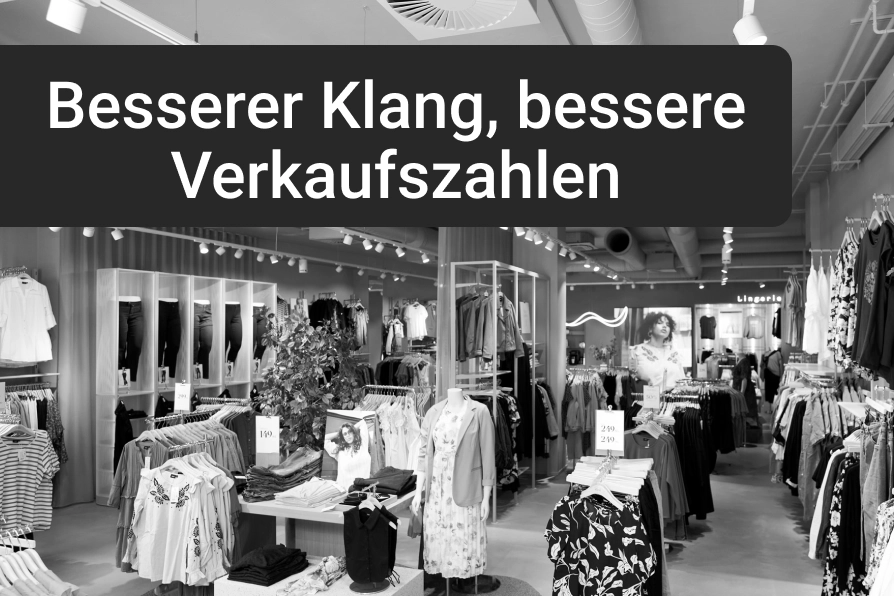
Klang als Verkaufsinstrument: Wie In-Store-Audio den ROI im Einzelhandel beeinflusst
Einzelhandelsgeschäfte investieren stark in die physische Umgebung. Beleuchtung, Ladenlayout und Materialien werden sorgfältig geplant und konsequent verwaltet. Klang wird typischerweise anders behandelt: spät hinzugefügt, lokal verwaltet oder ganz unbeachtet gelassen. Das ist eine verpasste Chance und in einigen Fällen sogar aktiv schädlich.
Warum Sound im Einzelhandel nicht länger optional ist
Die Forschung zu Musik im Einzelhandel ist eindeutig: Die richtige Audio-Umgebung erhöht die Verweildauer, verbessert die Markenwahrnehmung und beeinflusst das Kaufverhalten. Forschung der University of Bath deutet darauf hin, dass passende Hintergrundmusik die Konsumausgaben um über 10 % steigern kann, indem sie ein ansprechenderes Erlebnis schafft.
Die wichtigere Erkenntnis betrifft den negativen Aspekt. Kunden verweilen in Bereichen, in denen sich der Klang angenehm anfühlt, und bewegen sich schnell durch Zonen, in denen Audio aufdringlich oder undeutlich wirkt. Wenn Lautsprecher in der Nähe von Eingängen oder Kassen geballt sind, werden diese Zonen akustisch aggressiv, während tiefere Bereiche des Geschäfts flach oder unverbunden wirken und Kunden unbeabsichtigt von margenstarken Bereichen fernhalten. Eine schlechte Klangverteilung hilft nicht nur nicht. Sie stört aktiv natürliche Bewegungsmuster und das Einkaufsverhalten.
Der Unterschied zwischen Musik und Sounddesign
Die meisten Diskussionen über Audio im Einzelhandel konzentrieren sich auf die Playlist-Auswahl. Das ist wichtig, aber zweitrangig gegenüber der Abdeckung. Studien zeigen, dass sich der Umsatz verbessert, wenn die Musik mit den Produkten und der Markenidentität übereinstimmt, aber diese Übereinstimmung funktioniert nur, wenn die Musik den Kunden tatsächlich gleichmäßig erreicht. Eine gut gewählte Playlist, die über schlecht platzierte Lautsprecher wiedergegeben wird und Hotspots in der Nähe des Eingangs und tote Zonen im hinteren Bereich erzeugt, führt zu einem schlechteren Ergebnis als eine konsistente, moderate Hintergrundmusik auf der gesamten Fläche.
Das ist das Problem 360-Grad-Klang löst das Problem strukturell. Omnidirektionale Lautsprecher verteilen den Klang gleichmäßig in alle Richtungen, anstatt ihn nach vorne in einen Hotspot zu projizieren, was bedeutet, dass die Abdeckung nicht von der exakten Platzierung der Lautsprecher abhängt. Das Ziel ist nicht nur, Musik abzuspielen. Es ist, eine konsistente akustische Umgebung auf jedem Quadratmeter des Geschäfts zu schaffen.
Die Kosten des Playlist-Drifts für eine Einzelhandelskette
Für Geschäfte mit einem Standort ist das Audiomanagement relativ unkompliziert. Für Ketten wird es zu einem Governance-Problem. Wenn lokales Personal die Musik kontrolliert, Playlists auswählt, die Lautstärke anpasst oder persönliche Geräte verbindet, führt dies zu einem fragmentierten Erlebnis an verschiedenen Standorten. Zwei Geschäfte im selben Markenportfolio können sich völlig unterschiedlich anfühlen, was die Konsistenz untergräbt, die eine Marke erkennbar macht. Markenkonforme Musik erhöht im Vergleich zu gar keiner Musik die Verweildauer um über 42 %. Shopify Dieser Anstieg verschwindet in dem Moment, in dem verschiedene Geschäfte unterschiedliche Erlebnisse bieten.
Bolia erlebte genau dieses Problem. Die Geschäfte erhielten Musik auf USB-Sticks, und die Filialleiter mussten daran denken, die Playlist zu laden, auf Wiedergabe zu drücken und sie auf Wiederholung zu stellen. Wenn jemand es vergaß, verstummte das Geschäft, und es war nicht garantiert, dass zwei Geschäfte an einem bestimmten Tag gleich klangen. Die Lösung war keine bessere Playlist. Es war die vollständige Verlagerung der Entscheidung von der Ladenfläche. Mit Spottune Cloud, sendet die Zentrale nun mit einem Klick Musik an jedes Geschäft.
Rains zeigt die gleiche Lösung in größerem Maßstab. Alle 48 Filialen weltweit werden von einem einzigen Cloud-Dashboard in der Zentrale aus verwaltet, wobei Playlists, Lautstärke und Zeitplanung zentral festgelegt werden. Kein lokaler Manager greift in das System ein, und wenn Rains neue Geschäfte eröffnet, wird jedes davon in dasselbe Dashboard integriert, anstatt eine neue Möglichkeit für Abweichungen zu schaffen.
Der Business Case für die Modernisierung der Audio-Infrastruktur
Jeder Quadratmeter eines Einzelhandelsgeschäfts ist mit Kosten verbunden. Miete, Ausstattung, Personal und Inventar müssen sich rentieren. Wenn ein Bereich des Geschäfts eine schlechte akustische Erfahrung bietet – zu laut, zu leise oder inkonsistent – rentiert er sich im Verhältnis zu seinen Kosten nicht. Gute Klangkulissen im Einzelhandel können zu einer Umsatzsteigerung von 28 % führen, während schlechte Klangkulissen einen Rückgang von 28 % verursachen können. ROCKWOOL Der Unterschied zwischen einer gut gemanagten und einer schlecht gemanagten akustischen Umgebung ist groß genug, um die Gesamtleistung des Geschäfts zu beeinflussen.
Für Einzelhandelsketten ist die Rechnung einfach. Ein System, das eine konsistente, gleichmäßige Abdeckung an allen Standorten bietet, eliminiert eine Variable, die sonst die Investitionen in alle anderen Bereiche untergraben würde.
Wie eine gute Audio-Infrastruktur im Einzelhandel aussieht
Geschäfte, die Audio als Infrastruktur und nicht als nachträglichen Gedanken betrachten, weisen einige Merkmale auf. Die Abdeckung ist auf der gesamten Fläche konsistent, ohne Hotspots oder tote Zonen, was die Omni Track -Lautsprecher leisten, indem sie den Schall gleichmäßig in alle Richtungen verteilen, bis zu 75 m² pro Lautsprecher abdecken und die ungleichmäßige Verteilung eliminieren, die direktionalen Lautsprecher erzeugen. Die Kontrolle über Playlists, Lautstärke und Zeitplanung ist an allen Standorten zentralisiert, wodurch Playlist-Drift vermieden wird und die Markenkonsistenz intakt bleibt, egal welches Geschäft ein Kunde besucht. Und die Infrastruktur selbst ist einfach: Drahtlose Systeme, die auf vorhandene Stromschienen montiert werden, wie sie von Bolia und Rains im großen Maßstab demonstriert wurden, ermöglichen es, die Lautsprecherplatzierung anzupassen, wenn sich das Geschäft entwickelt, ohne Neuverkabelung.
Häufig gestellte Fragen
Erhöht Musik im Geschäft tatsächlich den Umsatz? Ja, durchweg in mehreren Studien bestätigt. Der Effekt ist am stärksten, wenn die Musik zur Marke passt und mit einer angenehmen, gleichmäßigen Lautstärke im gesamten Raum wiedergegeben wird. Schlecht verteilter Schall kann den gegenteiligen Effekt haben, das Einkaufsverhalten stören und die Verweildauer reduzieren.
Was ist Playlist-Drift und warum ist sie für Einzelhandelsketten wichtig? Playlist-Drift tritt auf, wenn einzelne Mitarbeiter in den Filialen die Musikauswahl lokal steuern, was zu inkonsistenten Audioerlebnissen an verschiedenen Standorten führt. Dies untergräbt die Markenkonsistenz und nimmt die Möglichkeit, eine koordinierte In-Store-Audiostrategie im großen Maßstab umzusetzen – genau das Problem, das Bolia durch die Verlagerung der Kontrolle in die Zentrale gelöst hat.
Wie berechne ich den ROI eines neuen Audio-Systems für den Einzelhandel? Beginnen Sie mit der Verweildauer. Eine Steigerung der durchschnittlichen Verweildauer um 1 % korreliert mit einer Umsatzsteigerung von etwa 1,3 %. Wenn die Modernisierung Ihres Soundsystems eine messbare Verbesserung der Verweildauer der Kunden bewirkt, insbesondere in Bereichen, die zuvor schlecht abgedeckt waren, beträgt die Amortisationszeit typischerweise Monate statt Jahre. Unser Projektkalkulator gibt eine erste Schätzung für Ihren eigenen Raum.
Zusammenfassung
Audio ist im Einzelhandel kein Feinschliff. Es ist Infrastruktur, und wie jede Infrastruktur funktioniert sie entweder konsistent oder sie schafft Probleme. Geschäfte, die es richtig machen, behandeln Audio genauso wie Beleuchtung: mit einem einzigen System, zentraler Steuerung und konsistenter Bereitstellung an jedem Standort. Geschäfte, die dies nicht tun, schaffen ein fragmentiertes Erlebnis, das alles andere untergräbt.
Sehen Sie die gesamte Fallstudien-Bibliothek für weitere Beispiele, wie Einzelhandelsketten den Klang an verschiedenen Standorten verwalten.